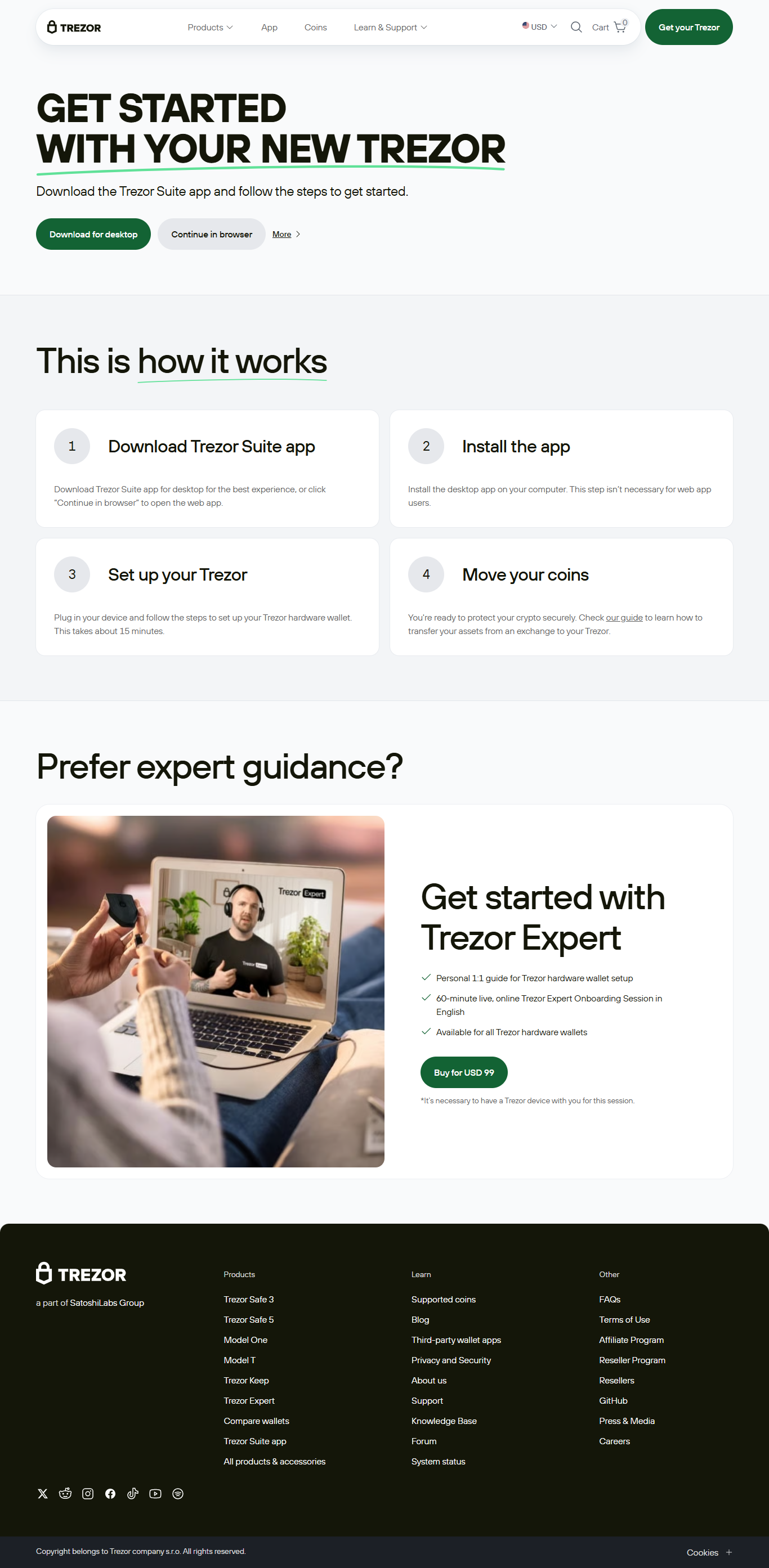
Ultimate Guide to Trezor Suite — Everything You Need to Know
In the rapidly evolving world of cryptocurrency security, managing digital assets safely is crucial. When it comes to top-tier hardware wallet solutions, Trezor stands out as a long-standing leader. At the center of this ecosystem is the Trezor Suite, an intuitive desktop (and web) application that empowers users to secure, manage, and transact with crypto in one centralized interface.
Whether you’re new to crypto or an advanced HODLer, this guide will walk you through every aspect of Trezor Suite, from setup to advanced features, including how to complete Trezor Login and use trezor bridge. We’ll also show you how to get started from the official Trezor onboarding page trezor.io/start.
What is Trezor Suite?
Trezor Suite is the official application developed by SatoshiLabs for managing your Trezor hardware wallet. It’s the secure gateway that connects your device to your crypto assets while ensuring private keys remain offline and inaccessible to malicious actors.
Unlike third-party wallets, Trezor Suite has been designed and audited by Trezor engineers to offer maximum security, transparency, and usability. With support for multiple coins, in-app exchange features, and portfolio views, Trezor Suite is the go-to hub for Trezor device users.
Learn how to start your journey by visiting the official trezor.io/start page.
Why Use Trezor Suite?
Security and control are the top reasons people choose Trezor Suite. Let’s break down the core benefits:
1. Enhanced Security
Your crypto remains offline on your hardware wallet and is only accessible through Trezor Suite when you complete your Trezor Login. No seed phrase or private key ever touches the internet.
2. Clean User Interface
Trezor Suite offers a modern, easy-to-navigate dashboard with clear charts, balances, and actionable functionality.
3. Multi-Asset Support
From Bitcoin and Ethereum to smaller altcoins, Trezor Suite supports a wide range of assets — all managed in one place.
4. Built-in Exchange
Through third-party integrations visible inside Trezor Suite, users can swap between supported assets without exporting keys.
5. Portfolio Overview
View total balances, performance over time, and detailed transaction histories within Trezor Suite.
To begin, make sure you have your Trezor device and proceed to trezor.io/start for your step-by-step user journey.
Setting Up Trezor Suite
To get started with Trezor Suite, follow these steps:
Step 1 — Visit Official Onboarding
Go to trezor.io/start, where you’ll find clean instructions and download links for Trezor Suite for Windows, macOS, and Linux.
Step 2 — Download and Install
Download Trezor Suite for your operating system. Installation is straightforward — follow the prompts or watch reference videos on the official site.
Step 3 — Install trezor bridge
Before you connect your device, you’ll be prompted to install trezor bridge. This small piece of software enables secure communication between your Trezor hardware wallet and the Trezor Suite interface.
Step 4 — Connect Your Device
Using the USB cable, connect your Trezor device. You’ll complete Trezor Login directly in Trezor Suite by entering your PIN on the hardware device itself — never on your computer.
Step 5 — Create or Recover Wallet
Trezor Suite guides you through creating a new wallet or recovering an existing one using your seed phrase. Make sure your recovery seed is backed up securely offline.
By following this process starting at trezor.io/start, you ensure your setup is official and secure.
Understanding Trezor Login
Trezor Login isn’t a typical username/password system. Instead, it’s the process of unlocking your Trezor hardware wallet within Trezor Suite:
Connect your device to your computer.
Open Trezor Suite.
Enter your hardware wallet PIN on the device screen.
Approve device access.
This login method ensures that your private keys are kept offline at all times. No login credentials are stored on servers or cloud platforms.
What is trezor bridge?
trezor bridge is essential middleware that facilitates secure communication between your Trezor device and Trezor Suite. It’s required because browsers and operating systems cannot natively communicate with USB devices in a secure, crypto-safe way.
Once trezor bridge is installed, Trezor Suite will recognize your wallet instantly when connected. For official instructions, visit trezor.io/start and follow the prompt to install trezor bridge.
Navigating the Trezor Suite Dashboard
When you first enter Trezor Suite, you’ll encounter a powerful dashboard displaying:
Portfolio value and change over time
Individual asset balances
Recent transactions
Send / Receive buttons
Tools like settings, exchange, and account navigation
Every action — whether sending funds or signing messages — requires confirmation on your physical device during Trezor Login, protecting you against remote exploits.
If you need support, official tutorials and FAQs are listed at trezor.io/start.
Sending and Receiving Crypto in Trezor Suite
Sending Assets
Click “Send” in Trezor Suite.
Choose the asset and address.
Enter the amount.
Confirm transaction details on the screen.
Approve the transfer on your connected Trezor device.
Receiving Assets
Click “Receive”.
Trezor Suite generates an address.
Confirm the address on your device.
Copy the address and share it with the sender.
This two-step confirmation ensures that address manipulation by malicious software is prevented.
Security Features to Know
Here’s how Trezor Suite and your device keep you safe:
1. Offline Key Storage
Private keys never leave the device.
2. PIN Protection
Your PIN is required for every Trezor Login.
3. Passphrase Support
Add an extra layer of security by enabling a passphrase — a secret word known only to you.
4. Firmware Updates
Trezor Suite alerts you when firmware updates are available. Updating keeps you on the most secure version.
By always starting at trezor.io/start, you reduce the risk of fake downloads or phishing sites mimicking the official interface.
Using Trezor Suite with DeFi and Third-Party Apps
While Trezor Suite manages assets securely, advanced users may connect their Trezor to decentralized finance (DeFi) apps. This is done by:
Completing Trezor Login through a Web3 provider.
Approving connection on the hardware device.
Always verify URLs and confirm transactions on-device. Learn more on the official help pages linked from trezor.io/start.
Common Issues & Troubleshooting
Trezor Suite Not Detecting Device
Ensure trezor bridge is installed.
Try a different USB cable or port.
Visit trezor.io/start for official troubleshooting.
Can’t Complete Trezor Login
Confirm you are entering the correct PIN on the device.
Restart the app and reconnect your device.
Firmware Upgrade Fails
Follow prompts exactly.
Do not disconnect the device during updates.
Official resources and community forums linked from trezor.io/start provide additional guidance.
Trezor Suite Updates & New Features
Trezor Suite is continuously updated by the Trezor team. Updates may introduce:
Expanded coin support
Enhanced analytics
UX improvements
Security patches
Every update is announced and explained with details starting from trezor.io/start and official social channels.
Final Thoughts
Trezor Suite is more than just a wallet interface — it’s the secure control center for your crypto. From simple balance checks to complex transactions and advanced security options like passphrases, Trezor Suite pairs world-class security with an approachable user experience.
By always starting with trezor.io/start and completing your Trezor Login securely with trezor bridge, you protect your financial sovereignty against online threats.
Whether you’re a beginner or a seasoned crypto investor, integrating Trezor Suite into your security routine is a smart move.
Frequently Asked Questions (FAQ)
1. What is Trezor Suite?
Trezor Suite is the official app for managing your Trezor hardware wallet, enabling secure transactions and portfolio management.
2. How do I complete Trezor Login?
You connect your device, open Trezor Suite, and enter your PIN on the device. The private keys remain offline.
3. Why do I need trezor bridge?
trezor bridge enables secure USB communication between your device and the Trezor Suite app.
4. Where do I start?
Begin your setup and download Trezor Suite by visiting trezor.io/start.
5. Is Trezor Suite safe?
Yes. Private keys never leave your device, and all transactions require physical confirmation on-device.
6. Can I manage multiple coins in Trezor Suite?
Yes — Trezor Suite supports many cryptocurrencies in one unified interface.
7. What if my device isn’t recognized?
Ensure trezor bridge is installed and try different USB ports. Refer to official guidance at trezor.io/start.
8. Can I use Trezor Suite on mobile?
Trezor Suite supports desktop primarily, but work is ongoing to expand usability. Check trezor.io/start for latest support info.
9. Is a passphrase necessary?
Passphrases provide additional security, but they are optional. Use them for extra protection.
10. Are firmware updates important?
Yes — firmware updates enhance security and functionality. Always install updates through Trezor Suite.